
Digestion
How GLP-1 medication affects digestion
Reviewed by the GLP-1 Essentials formulation team · 6 min read · Updated October 11, 2026
Key takeaways
- GLP-1 medications slow stomach emptying, part of how they reduce appetite.
- That slower pace is why some people feel full, bloated or uncomfortable after meals.
- Symptoms often show up around starting or increasing a dose; talk to your prescriber about anything persistent.
In this article
What GLP-1 medications do
GLP-1 medications such as semaglutide and tirzepatide mimic a hormone your gut naturally releases after you eat. That hormone helps signal to your brain that you have had enough, which is a big part of why these medications reduce appetite. They also slow down gastric emptying — the speed at which food leaves your stomach and moves on into your intestines. Both effects work together: you feel satisfied sooner, and that feeling lasts longer.
Why digestion feels different
When the stomach empties more slowly, food simply stays there longer than you are used to. A meal that once felt normal can now feel heavy, and the sense of fullness can stretch on for hours. This is not a sign that something is broken; it is the medication doing part of its job. But it does mean your usual portions and eating habits may no longer feel comfortable.
The same slower pace that helps you feel full is what can make meals feel heavy.
What people commonly notice
People describe a range of sensations: feeling full after only a few bites, bloating, burping, a general sense of heaviness, and changes in bowel habits in either direction. Some notice these things only now and then, others more often. Experiences vary widely from person to person, and from one week to the next. If something feels different from what you expected, it is worth mentioning to your prescriber.
When it tends to happen
Digestive changes often show up when you first start a GLP-1 medication or shortly after a dose increase, while your body adjusts. Many people also notice them more after larger meals or meals that are high in fat, because those take longer to digest anyway. Eating quickly can make things feel worse. Paying attention to these patterns can help you see what tends to set things off for you.
Everyday habits people find helpful
These are general habits many people find useful — not medical advice, and not a replacement for guidance from your care team. Smaller meals, eaten slowly, give a slower stomach less to handle at once. Going easy on very fatty or fried foods can help meals feel lighter. Staying hydrated through the day, and staying upright for a while after eating rather than lying down, are also simple things people mention.
When to talk to your doctor
Contact your doctor promptly if you have severe or persistent abdominal pain, repeated vomiting, signs of dehydration (such as dizziness, very dark urine or not passing urine), or anything else that worries you. Do not wait for symptoms to pass on their own, and do not try to manage them with supplements alone. Your prescriber knows your medication and your history, and can tell you whether what you are feeling is expected.
Where digestive enzymes fit in
Digestive enzymes are a food supplement some people choose to take with meals, to support the breakdown of the food they eat. They are not a medicine, and they do not change how your GLP-1 medication works. If you are curious, you can read how digestive enzymes work or see exactly what is in our Digestive Enzymes. As with any supplement, check with your prescriber or pharmacist first.
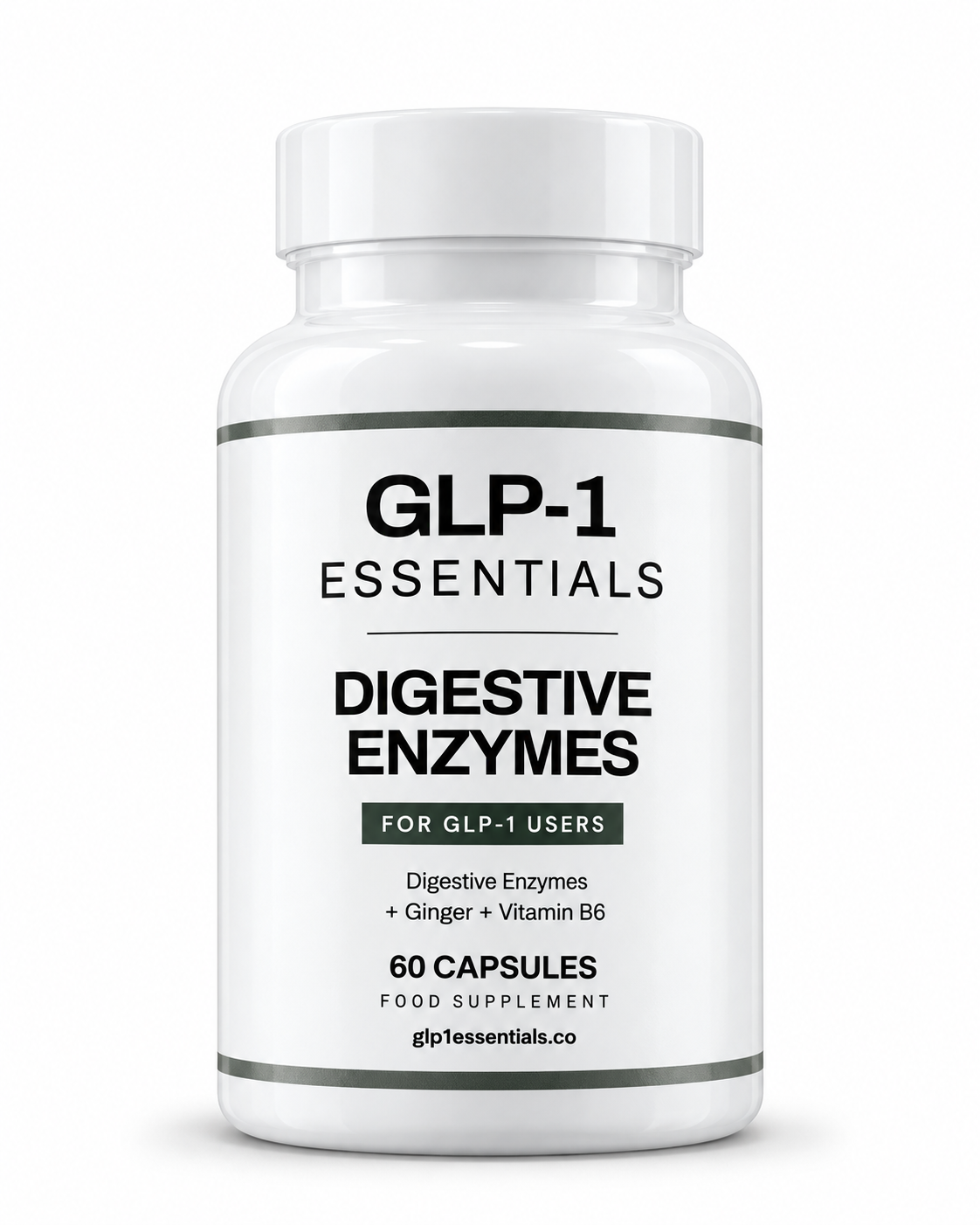
Digestive Enzymes — formulated for people on GLP-1 medication
See the productThis article is for general information and is not medical advice. Talk to your prescriber or pharmacist about symptoms or supplements. These statements have not been evaluated by the Food and Drug Administration.